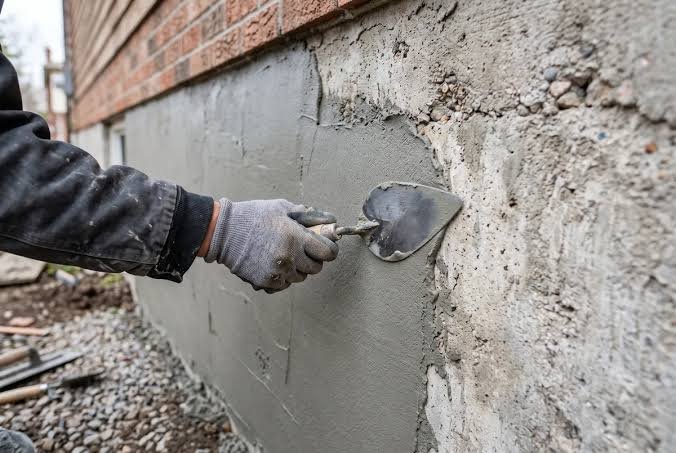
The cement coating on the visible part of your foundation rarely gets attention until it starts falling off in chunks. Known as parging, this thin layer sits between the soil line and the brick or siding above, and it quietly does a lot of work. It protects the concrete or block beneath from weather, impact, and the freeze-thaw cycles that define Ontario winters, and it gives the base of the house a clean, finished look.
Parging does not last forever. Knowing what failure looks like helps homeowners act early, when repairs are small, instead of late, when moisture has already reached the structure behind it. Here are eight signs to watch for and how to respond.
1. Hairline Cracks That Keep Spreading
A few fine cracks are normal, particularly on older coatings. The ones to worry about are those that lengthen, branch, or widen from one season to the next. Cracks give water a way in, and freezing turns small openings into larger ones. If you can slide a coin into a crack, it has moved beyond cosmetic.
2. A Hollow Sound When Tapped
Gently tap the surface with the handle of a screwdriver or a small hammer. A solid, dull sound means the parging is still bonded to the wall. A hollow, drum-like sound means the coating has separated from the foundation behind it. Delaminated parging is only held up by its own weight, and it will eventually fall off.
3. Bubbling, Bulging, or Blistering
Raised patches mean moisture or air is trapped behind the coating. As water behind the parging freezes, it pushes outward and lifts the surface. These areas typically crack open and shed material the following winter.
4. Flaking and Crumbling Surface
If the surface is powdery, sandy, or sheds fine material when rubbed, the mortar mix has deteriorated. This is common on coatings that are several decades old and on those made with poor-quality sand or an incorrect mix. Left alone, the layer thins until the foundation is exposed.
5. Missing Sections
Patches where the parging has fallen away entirely expose bare concrete or block. These areas absorb water more readily, and the exposed foundation weathers faster. Missing pieces tend to widen, since the edges around them are usually loose as well.
6. White Staining
White, chalky deposits on or around the parging, known as efflorescence, show that water is moving through the masonry and leaving salts behind. The stain itself is cosmetic, but it points to a moisture source that should be found.
7. Dampness or Moisture at the Base of the Wall
Dark, damp patches on the foundation after rain or snowmelt suggest water is not being managed. This is as likely to be a grading or gutter issue as a parging problem, so it is worth checking where downspouts discharge and which way the soil slopes.
8. Cracks Where the Parging Meets the Brick
The joint between the top edge of the parging and the wall above is a common failure point. If the seam has opened, rain running down the wall can enter behind the coating and soak the foundation.
What Causes Parging to Fail
- Age. Coatings typically last 20 to 30 years, and many older homes are well past that.
- Moisture from the ground. Clay-heavy soils common in the GTA hold water against foundation walls and push moisture outward.
- Poor drainage. Downspouts that empty near the wall and soil sloping toward the house keep the base wet.
- Freeze-thaw cycles. Repeated freezing behind the coating forces it off the wall.
- Poor original application. Parging put over a dirty, damp, or unprepared surface may never bond properly.
- Structural movement. Settling or foundation cracking can crack the coating above it.
Repair Options
Patching
Where the coating is mostly sound and damage is limited, loose material is cut back to a solid edge and the area is patched with a compatible mix. This is practical for small, isolated problems.
Partial Reapplication
If one side of the house is more exposed than others, only that elevation may need new parging. The edges are cut back and the new coat is blended into the existing finish.
Full Removal and Reapplication
When the coating is hollow, flaking, or widely cracked, the safest approach is to remove it and start fresh. The wall is cleaned, any substrate damage is repaired, and a new bonding coat and finish coat are applied. Professional parging Toronto work usually includes surface preparation, since a good bond is what makes the new coating last.
Addressing the Substrate
If parging keeps failing in the same spot, the foundation itself may be cracked or moving. In that case, repairing the wall comes first. A contractor offering foundation repair can assess whether the issue is cosmetic or structural before any coating is applied.
Why DIY Patcocal Conditions
Parging is mortar work, so it needs temperatures above roughly 5°C during application and for several days afterward. In Ontario, the best window runs from late April to mid-October. Spring inspections let you see what winter did. Homeowners seeking Vaughan masonry services often book early, since foundation work fills the calendar once the season opens.
Protecting New Parging
- Keep gutters clean and downspouts directing water several feet from the foundation
- Maintain soil grading so it slopes away from the house
- Keep mulch, soil, and plants from piling against the coating
- Inspect annually in spring and after heavy winters
- Address small cracks promptly instead of waiting
See also: Enhance Your Landscape with Beautiful Grass Types
FAQ
How long does foundation parging last?
A well-applied coating on a sound wall typically lasts 20 to 30 years. Drainage, soil conditions, and workmanship all affect how long it holds.
Is parging the same as waterproofing?
No. Parging protects the exposed surface from weather and impact. True waterproofing is a membrane or coating applied to the exterior of the foundation below grade to keep groundwater out.
Can I parge over old parging?
Only if the old layer is fully bonded and sound. Hollow or flaking parging has to be removed first, or the new coat will fail along with it.
Does failing parging mean my basement will leak?
Not directly, but it can be an early sign of moisture problems. Basement leaks most often come from drainage or crack issues, so it is worth checking the whole picture.